- Main article: Ornithology
Anseriformes is an order containing ducks, geese, and swans.
Ducks, Geese, and Swans (Anatidae)
The family Anatidae consists of medium-sized to large waterbirds, including ducks, geese, and swans. There are 10 species in this family on the 2020 Official Bird List. Most members of this family are distinguished by large, horizontally flattened bills, longs necks, short tails, and webbed feet. They have lammellae in their bills which aids in filter feeding. Young of this family are precocial. These birds have often been used for hunting and food. The feathers are used to stuff beds, pillows, etc.
Ducks
Ducks are a mostly aquatic assemblage of sub-families of Anatidae. Ducks differ from geese and swans in several ways. They are smaller, have shorter necks, exhibit sexual dimorphism, do not exhibit strong pair bonding, and have nostrils placed higher on their bills. Ducks have a structure on the side of their beak that serves as a comb to filter food and aid in preening. Ducks either dabble or dive. Diving ducks swim below the surface to forage. Dabbling ducks feed on the surface of water and stick their heads underwater to collect vegetation near the surface. The only duck that requires a call in the 2020 season is the mallard, however in previous years the black-bellied whistling duck required one as well (found here).
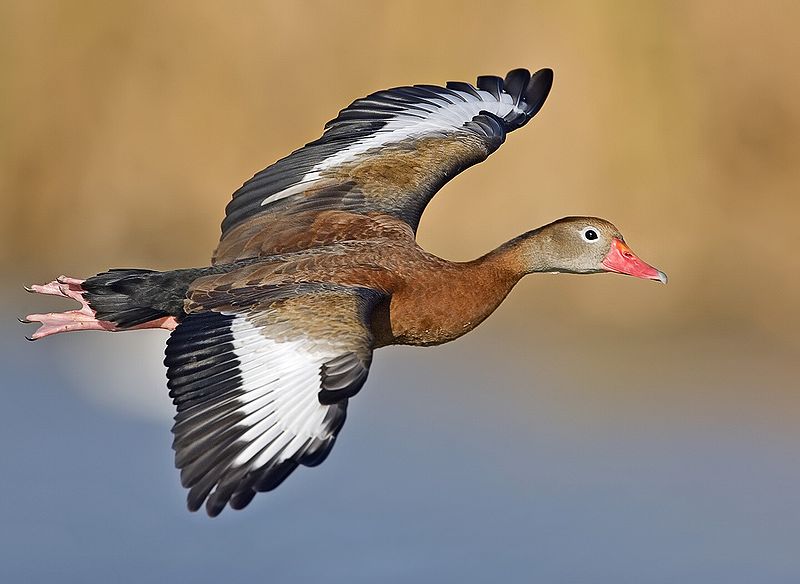
| Black-bellied Whistling Duck
|
|
| Species
|
Dendrocygna autumnalis
|
| Habitat
|
Freshwater ponds, lakes, and marshes
|
| Distribution
|
Central and South America, but is rapidly expanding northwards
|
| Diet
|
Plants, seeds, and invertebrates
|
| Behavior
|
U.S. populations often migrate a few hundred miles south into Mexico for the winter, but in Central and South America they do not migrate. Highly social, forms large flocks when not breeding.
|
| Nesting
|
Often nest in tree cavities or on the ground, near water sources. Incubation lasts for 25-30 days. Clutch size is 9-18 eggs. Nestling period is 10-13 days. Egg length is 1.8-2.4 in (4.5-6.2 cm), egg width is 1.2-1.6 in (3-4.2 cm). Eggs are white.
|
Least concern
|
|
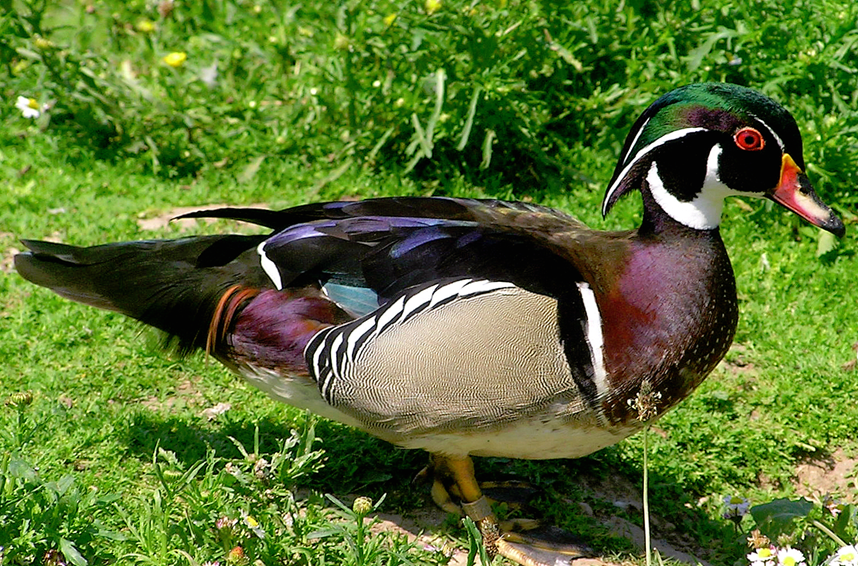
| Wood Duck
|
|
| Species
|
Aix sponsa
|
| Habitat
|
Freshwater ponds, lakes, rivers, and marshes
|
| Distribution
|
Common year-round in the southern United States and during summer throughout the United States and southern Canada.
|
| Diet
|
Seeds, fruits, invertebrates
|
| Behavior
|
Northern populations migrate south for the winter, southern populations tend to be year round. Relatively social when it isn't breeding season, when they tend to be more solitary.
|
| Nesting
|
Clutch size is 6-16 eggs. Egg length is 1.8-2.4 in (4.6-6.1 cm), egg width is 1.4-1.6 in (3.5-4.2 cm). Incubation period is 28-37 days. Nestling period is 56-70 days. Eggs are glossy creamy white to tan.
|
Least concern
|
|
| Mallard
|

|
| Species
|
Anas platyrhynchos
|
| Habitat
|
Freshwater ponds, lakes, and marshes
|
| Distribution
|
North America and Eurasia
|
| Diet
|
Plants, arthropods, and aquatic invertebrates
|
| Nesting
|
Nest on the ground on dry land; nests are generally concealed. Nests are about a foot across, with an egg bowl 1–6 inches deep and 6–9 inches across. Clutch size is 1-13 eggs. Egg length is 2.1-2.5 in (5.3-6.4 cm); egg width is 1.5-1.8 in (3.9-4.5 cm). The incubation period lasts for 23-30 days. Eggs are unmarked creamy to grayish or greenish buff.
|
| Call
|
Link
|
Least concern
|
|
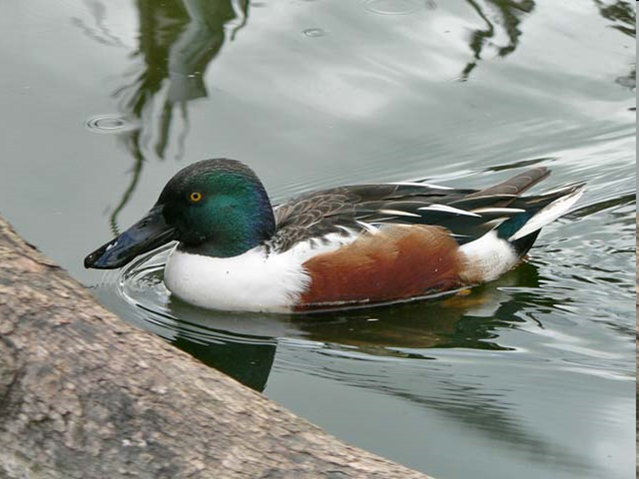
| Northern Shoveler
|
|
| Species
|
Anas clypeata
|
| Habitat
|
Shallow wetlands, also freshwater and saline marshes
|
| Distribution
|
Northern Shovelers don't just occur in the Americas, they also breed across Europe and spend the winter throughout Europe, Africa, and India.
|
| Diet
|
Small swimming invertebrates, some seeds
|
| Behavior
|
Tolerate human presence. Generally social, found in small flocks which can grow larger during migration. Breed in the northern hemisphere and travel long distances to warmer regions in the south for the winter.
|
| Nesting
|
Females use their body, feet, and bill to make a small depression on the ground about 8 inches wide. The nest scrape is usually surrounded on at least three sides by vegetation and lined with downy feathers. Clutch size is 8-12 eggs. Egg length is 1.8-2.2 in (4.6-5.7 cm); egg width is 1.3-1.5 in (3.3-3.9 cm). Incubation period is 22-25 days. Eggs are pale greenish gray or olive-buff.
|
Least concern
|
|
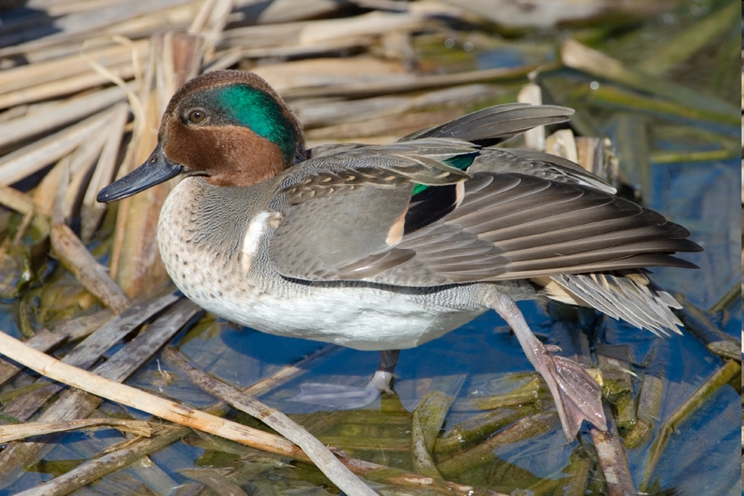
| Green-winged Teal
|
|
| Species
|
Anas crecca
|
| Habitat
|
Shallow waters and small ponds an pools
|
| Distribution
|
North America and Eurasia, migrating south for the winter.
|
| Diet
|
Seeds, stems, and leaves
|
| Behavior
|
Medium-distance migrants that migrate south to wintering grounds. Utilize all major North American flyways. Highly social, especially outside of breeding season. Form large flocks during migration and on wintering grounds that can number in the hundreds.
|
| Nesting
|
Nests are often built in sedge meadows, grasslands, brush thickets, or in woods near ponds, within around 200 yards of water. Clutch size is 6-9 eggs. Egg length is 1.7-2.0 in (4.3-5 cm); egg width is 1.3-1.4 in (3.2-3.5 cm). Incubation period is 20-23 days. Eggs are creamy white to pale olive-buff.
|
Least concern
|
|
Diving Ducks
Diving ducks are similar in appearance to dabbling ducks. However, instead of dabbling they actually dive under water for their food. They belong to the subfamily Aythyinae. They are commonly called pochards and scaups. There is one diving duck on the Science Olympiad bird list.
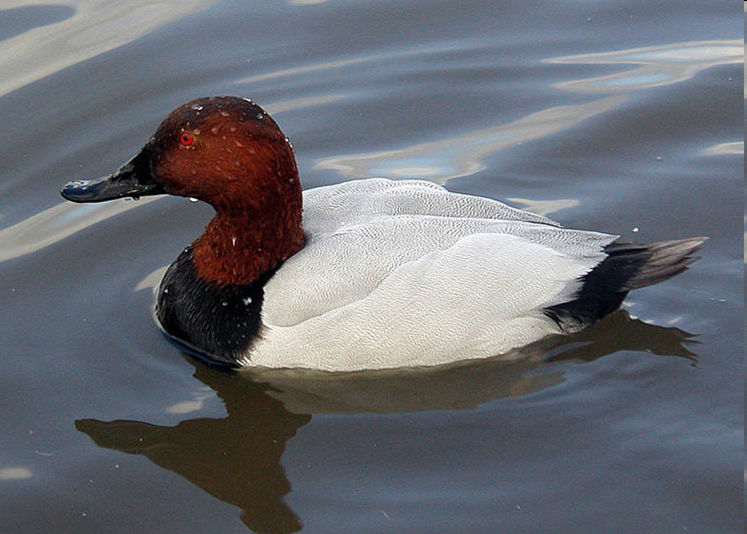
| Canvasback
|
|
| Species
|
Aythya valisineria
|
| Habitat
|
Prairie potholes
|
| Distribution
|
North America
|
| Diet
|
Seeds, buds, leaves, tubers, roots, snails, and insect larvae
|
| Behavior
|
When migrating south, they go in small flocks of 10-50 individuals. Females and immatures depart the breeding grounds first, followed by the males who depart from the molting grounds. Social outside of breeding season; they gather in large rafts by the thousands to tens of thousands.
|
| Nesting
|
Females select the nest spot, typically in shallow wetlands with cattails, rushes, sedges, and reeds. The nest is most frequently built over water, but sometimes on land. Clutch size is 5-11 eggs. Egg length is 2.4-2.6 in (6-6.7 cm); egg width is 1.6-1.8 in (4.2-4.6 cm). Incubation period is 24-29 days. Eggs are greenish and drab.
|
Least concern
|
|
Geese
Geese are a division of the family Anatidae. They are generally in between the sizes of the other two main groups- they are larger than the ducks, but smaller than the swans. They exhibit strong pair bonding, but unlike most monogamous species, are only territorial during the breeding season. The paired individuals are more dominant and eat more, contributing to them having more offspring. There are two geese on the Science Olympiad bird list.
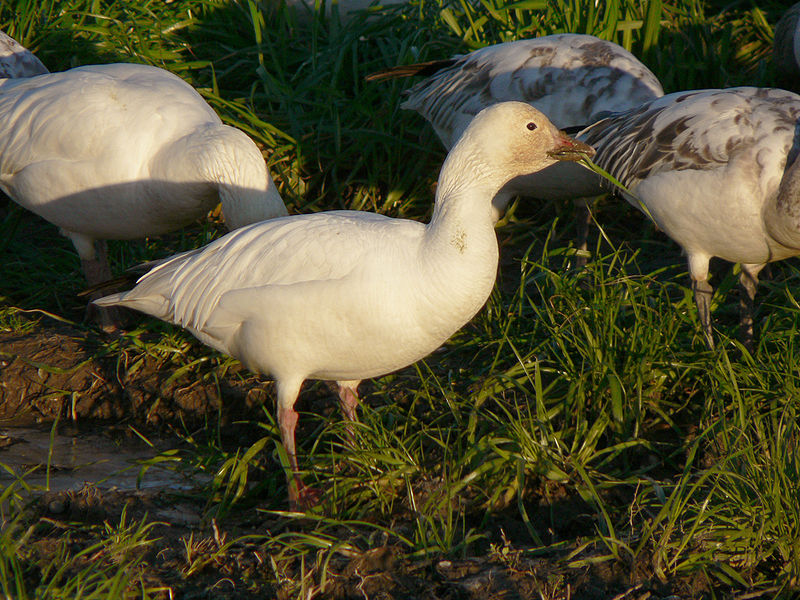
| Snow Goose
|
|
| Species
|
Chen caerulescens
|
| Habitat
|
Nest in subarctic and arctic, winters in coastal marshes, bays, and wet grasslands.
|
| Distribution
|
Breed north of the timberline in Greenland, Canada, Alaska, and the northeastern tip of Siberia, and spend winters in warm parts of North America.
|
| Diet
|
Water plants, grasses, and grain.
|
| Behavior
|
Highly social, form large flocks especially during migration containing hundreds of thousands of individuals. Family groups forage together in the winter. All populations migrate.
|
| Nesting
|
Build nests on dry ground when possible, on island sites or areas near small ponds. The female starts the nest with a scrape, and after eggs start being laid she adds down from her own breast and may add other natural material. Nests range from 3-6.5 feet across. Clutch size is 2-6 eggs. Egg length is 3.1-3.3 in (7.9-8.3 cm); egg width is 2.0-2.2 in (5.1-5.5 cm). The incubation period is 24 days. The nestling period is 1 day. Eggs are elongated oval with variable texture, creamy white but easily staining to dirty gray.
|
Least concern
|
|
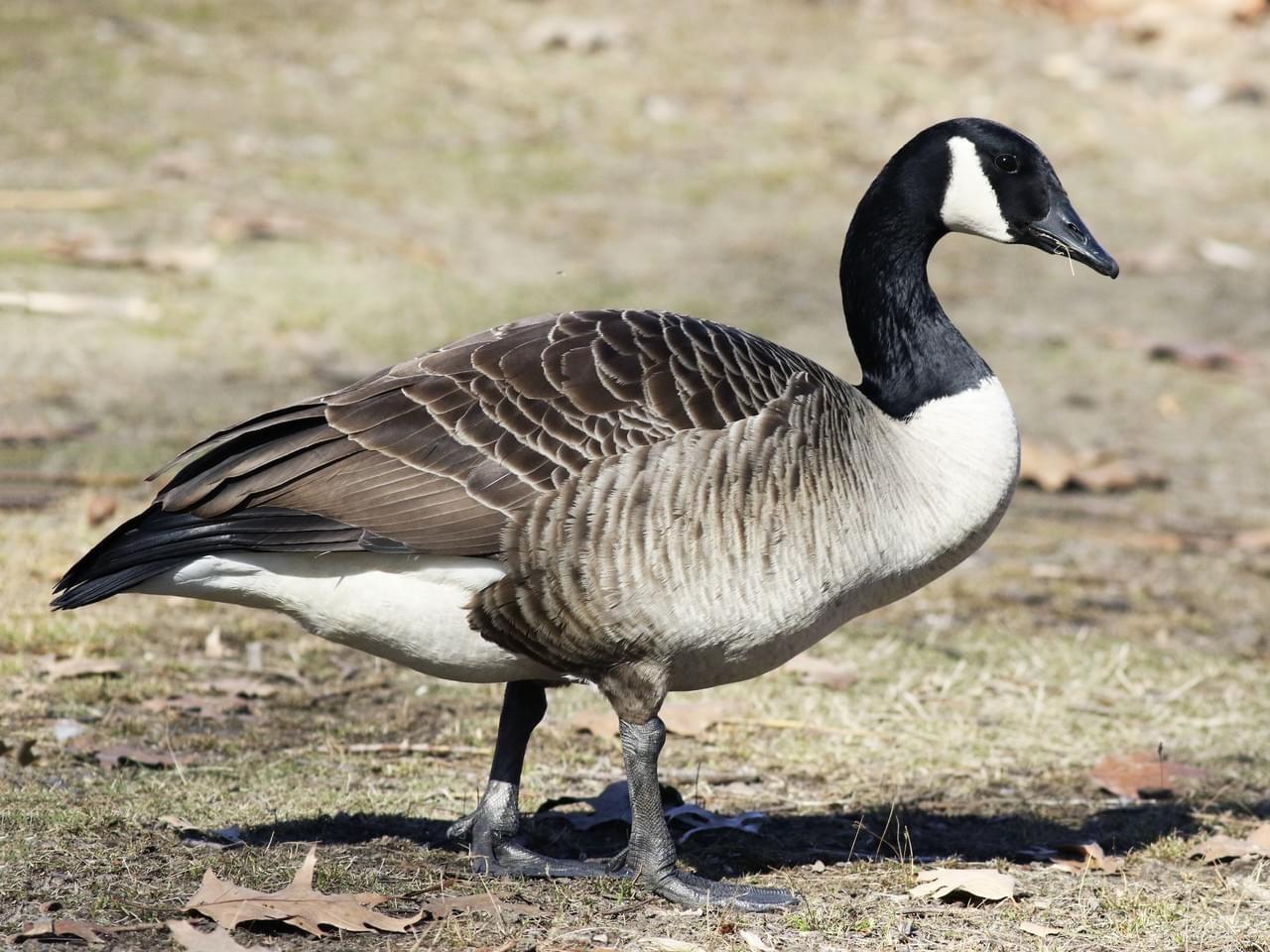
| Canada Goose
|
|
| Species
|
Branta canadensis
|
| Habitat
|
Marsh, grassy fields, grain fields
|
| Distribution
|
Occasionally found in Northern Europe. Mostly throughout North America.
|
| Diet
|
Grasses, sedges, berries, seeds
|
| Behavior
|
Most migrate, but many populations have become year-round. Live in family flocks. Are known for their hostility towards humans.
|
| Nesting
|
Nests are on the ground near water, usually on a slightly elevated site. Clutch size is 2-8 eggs. Egg length is 3.3 in (8.3 cm); egg width is 2.2 in (5.6 cm). Incubation period is 25-28 days. Nestling period is 42-50 days. Eggs are creamy white.
|
Least concern
|
|
Swans
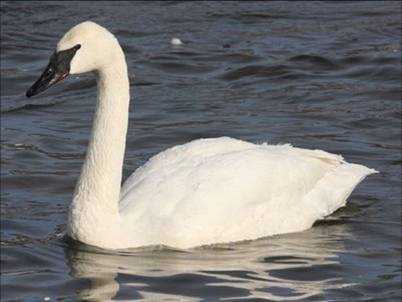
Swans are the largest of the three types of birds in Anatidae, and are among the largest flying birds. They are much more closely related to geese than ducks, and are grouped with geese in the subfamily Anserinae. They are not sexually dimorphic in plumage, but males are usually larger than females. Their plumage is all white in the Northern Hemisphere, but they can be a mix of black and white in the Southern Hemisphere. They generally live in temperate environments. They are almost entirely herbivorous. Swans mate for life, and may lay 3-8 eggs in a clutch. There is one swan on the Science Olympiad bird list.
| Trumpeter Swan
|
|
| Species
|
Cygnus buccinator
|
| Habitat
|
Shallow ponds and rivers
|
| Distribution
|
North America
|
| Diet
|
Aquatic plants
|
| Behavior
|
Highly social, especially outside breeding season. Medium-distance migrants, with some populations being non-migratory.
|
| Nesting
|
Nests are surrounded by water, less than 600 feet from shore, built on existing structures. Clutch size is 4-6 eggs. Egg length is 4.0-5.0 in (10.1-12.6 cm), egg width is 2.4-3.2 in (6.2-8.1 cm). Incubation period is 32-37 days. Eggs are creamy to dull white, often stained brown in the nest.
|
| Call
|
Link
|
Least concern
|
|
Sea Ducks
As their common name implies, the members of the subfamily Merginae are usually marine. Some mergansers prefer river habitats. They usually eat aquatic life. There have been 4 sea ducks on the Science Olympiad bird list in the past, but for the 2020 season there is only one.
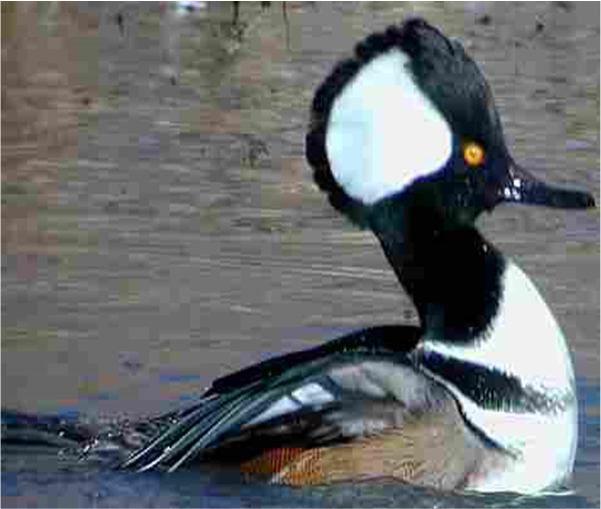
| Hooded Merganser
|
|
| Species
|
Lophodytes cucullatus
|
| Habitat
|
Forested wetlands
|
| Distribution
|
Patchy across North America
|
| Diet
|
Fish, aquatic insects, and crustaceans
|
| Behavior
|
Generally social, often seen in pairs or small groups. During breeding season they may gather in larger flocks. Known to be secretive. They breed in North America and migrate south for the winter, typically to areas where open water remains available. Some southern ones can be year-round.
|
| Nesting
|
Nest in cavities, typically 10-50 feet off the ground. Prefer cavities with 3-5 inch openings. Clutch size is 5-13 eggs. Egg length is 1.7-2.4 in (4.3-6.2 cm); egg width is 1.5-2.1 in (3.9-5.4 cm). Incubation period is 26-41 days. Nestling period is 1 day. Eggs are white, nearly spherical, and unusually thick shelled.
|
Least concern
|
|
Previous Birds
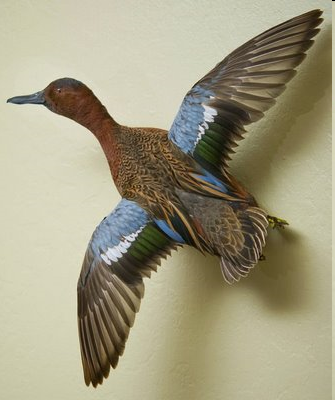
| Cinnamon Teal
|
|
| Species
|
Anas cyanoptera
|
| Habitat
|
Wetlands
|
| Diet
|
Plants, seeds, and invertebrates
|
Least concern
|
|
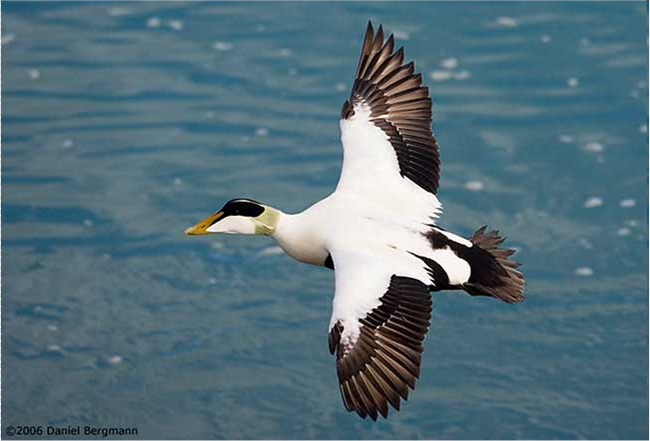
| Common Eider
|
|
| Species
|
Somateria mollissima
|
| Habitat
|
Ocean, sometimes lagoons and ponds along coast
|
| Diet
|
Aquatic invertebrates, especially mollusks, crustaceans, and sea urchins
|
Least concern
|
|
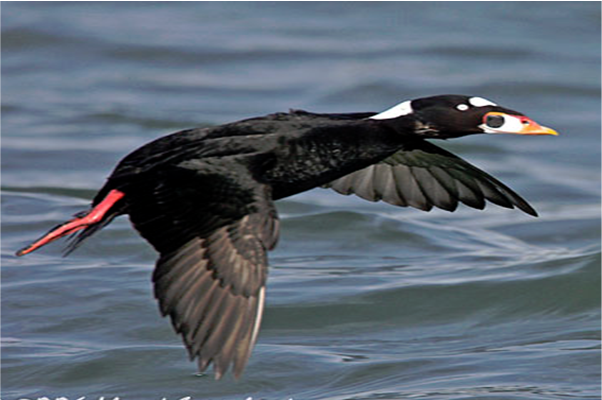
| Surf Scoter
|
|
| Species
|
Melanitta perspicillata
|
| Habitat
|
Shallow lakes and ocean waters
|
| Diet
|
Freshwater invertebrates, especially mollusks
|
Least concern
|
|
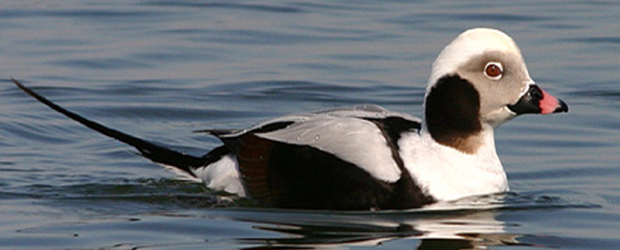
| Long-tailed Duck
|
|
| Species
|
Clangula hyemalis
|
| Habitat
|
Ponds, streams, wetland, and open ocean
|
| Diet
|
Mostly aquatic invertebrates, including insects and crustaceans, with some bivalves and plant matter
|
Least concern
|
|
|