- Main article: Ornithology
Accipitriformes is an order that includes most diurnal birds of prey, including hawks, eagles, and kites (but NOT falcons). They were previously included in Falconiformes, but a DNA study indicated that they are not closely related to falcons.
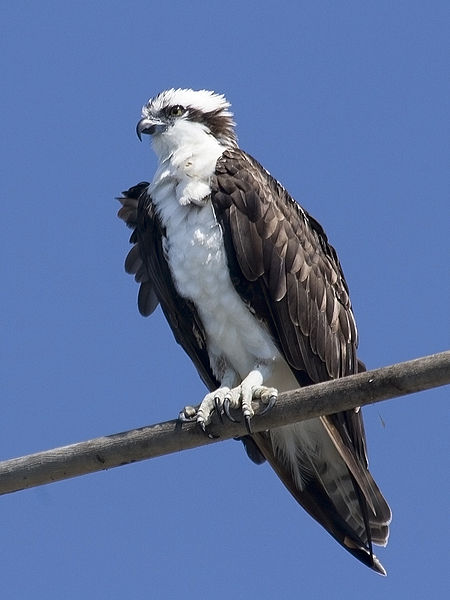
Osprey (Pandionidae)
| Osprey
|
|
| Species
|
Pandion haliaetus
|
| Habitat
|
Anywhere near water
|
| Distribution
|
Temperate and tropical regions of all continents, except Antarctica
|
| Diet
|
Fish
|
| Behavior
|
Migratory birds, generally breed in the northern hemisphere and migrate south for winter. They are solitary, living alone for most of the year except the breeding season when they form breeding pairs. Small flocks of 5-10 birds have been seen roosting together.
|
| Nesting
|
Nests are built of sticks and lined with biological materials. New nests are relatively small (>2.5 feet diameter and 3-6 inches deep), however after adding to the nest for years they can end up 10-13 feet with 3-6 feet diameter. The clutch size is 1-4 eggs. Egg length is 2.2-2.7 in (5.5-6.8 cm); egg width is 1.6-2.0 in (4.2-5 cm). The incubation period lasts for 36-42 days. The nestling period lasts for 50-55 days. Eggs are cream to pinkish cinnamon; wreathed and spotted with reddish brown.
|
Least concern
|
|
Hawks, Kites, Eagles, and Allies (Accipitridae)
| Bald Eagle
|
| File:About to Launch (26075320352).jpg
|
| Species
|
Haliaeetus leucocephalus
|
| Habitat
|
Large bodies of water
|
| Distribution
|
Most of Canada and Alaska, all of the contiguous United States, and northern Mexico
|
| Diet
|
Fish
|
| Behavior
|
During migration and winter they can be quite social, but are highly territorial and solitary during nesting season. Many migrate south for winter, but some may stay year-round.
|
| Nesting
|
Nest in tall conifers when available, providing visibility and easy flight access. They may also nest in deciduous trees, mangroves, and cactus. Nests are large, 5-6 feet diameter and 2-4 feet tall, with a variety of shapes. Ground nests are built of whatever is available. Nests may be reused and can take up to 3 months to build. The clutch size is 1-3 eggs. Egg length is 2.3-3.3 in (5.8-8.4 cm); egg width is 1.9-2.5 in (4.7-6.3 cm). The incubation period lasts for 34-36 days. The nestling period lasts for 56-98 days. Eggs are dull white, usually without markings.
|
| Call
|
Link
|
Least concern
|
|
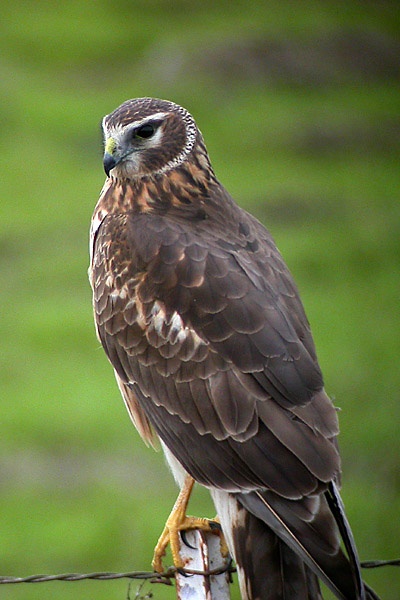
| Northern Harrier
|
|
| Species
|
Circus cyaneus
|
| Habitat
|
Wetlands and grasslands
|
| Distribution
|
Northern harriers breed in North America from northern Alaska and Canada south to central and southern California, Mexico and portions of the southern U. S., excluding the southeast region. Wintering occurs from southern Canada to northern South America.
|
| Diet
|
Small mammals
|
| Behavior
|
Partial migrants, birds from northern breeding areas migrate farther south for the winter than those from southern breeding areas. Engage in courtship displays to attract females. Exhibit both monogamous and polygamous mating systems.
|
| Nesting
|
Nests are on the ground, normally in a dense clump of vegetation. Nest building takes 1-2 weeks. The clutch size is 4-5 eggs. Egg length is 1.6-2.1 in (4.1-5.3 cm); egg width is 1.3-1.6 in (3.2-4 cm). The incubation period lasts for 28-36 days. The nestling period lasts for 14 days. Eggs are dull white, usually with no markings.
|
| Call
|
[Link to call/leave blank if no call is required Link]
|
Least concern
|
|
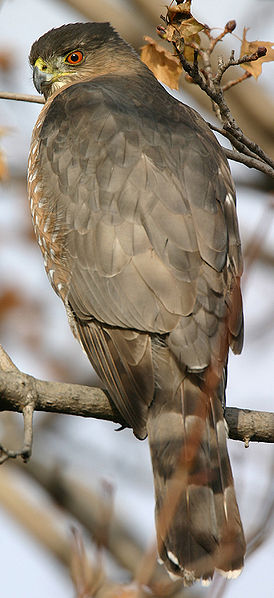
| Cooper's Hawk
|
|
| Species
|
Astur cooperii, formerly placed in the genus Accipiter, Accipiter cooperii
|
| Habitat
|
Open woodlands
|
| Distribution
|
Native to the North American continent and found from southern Canada to Mexico.
|
| Diet
|
Birds
|
| Behavior
|
Winter over most of the continental US, northern populations migrate as far south as southern Mexico and Honduras while southern populations tend to be year-round. Are generally solitary birds outside of breeding season. Monogamous, but they don't exhibit social interaction outside of the breeding pair.
|
| Nesting
|
They build nests in trees, often on flat ground instead of hillsides, and in dense woods. Nests are typically 25-50 feet high, often about two-thirds of the way up the tree in a crotch or on a horizontal branch. The clutch size is 2-6 eggs. Egg length is 1.7-2.0 in (4.4-5.1 cm); egg width is 1.4-1.6 in (3.5-4 cm). The incubation period lasts for 30-36 days. The nestling period lasts for 27-34 days. Eggs are pale blue to bluish white.
|
| Call
|
[Link to call/leave blank if no call is required Link]
|
Least concern
|
|
| Red-tailed Hawk
|
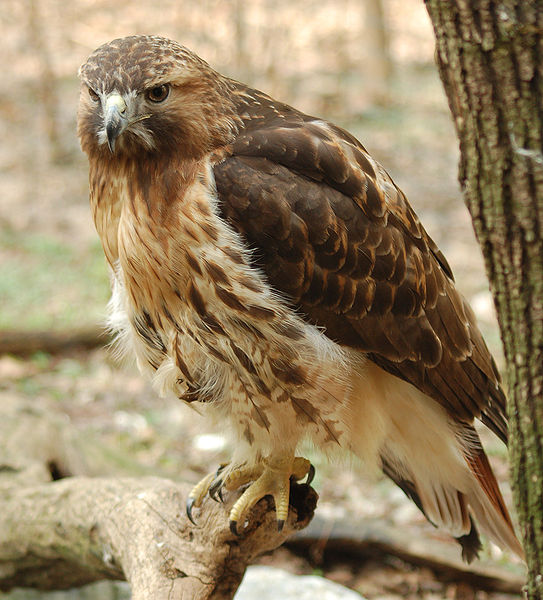
|
| Species
|
Buteo jamaicensis
|
| Habitat
|
Any habitat except thick forest and tundra
|
| Distribution
|
North America
|
| Diet
|
Small mammals
|
| Behavior
|
The northernmost populations migrate south, while more southern ones are year-long. Generally solitary but exhibit social behaviors during breeding season and in family groups. Pairs often remain together for life.
|
| Nesting
|
Nests are built in a high place where there is a good view. Nests may be reused year after year. The clutch size is 1-5 eggs. Egg length is 2.2-2.7 in (5.5-6.8 cm); egg width is 1.7-2.0 in (4.3-5 cm). The incubation period lasts for 28-35 days. The nestling period lasts for 42-46 days. Eggs are white or buffy, blotched or speckled with buff, brown, or purple..
|
| Call
|
Link
|
Least concern
|
|
| Golden Eagle
|
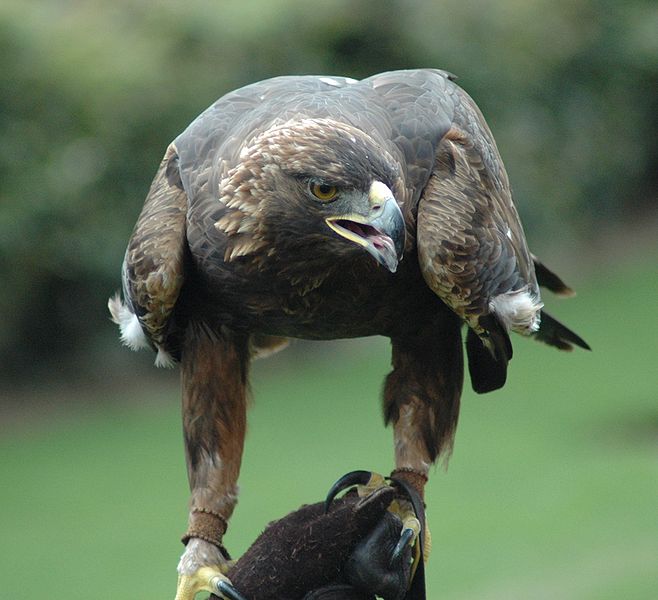
|
| Species
|
Aquila chrysaetos
|
| Habitat
|
Open areas
|
| Distribution
|
North America
|
| Diet
|
Mammals
|
| Behavior
|
Generally solitary or found in pairs. They will migrate from Canadian provinces and northern areas to northeastern states for winter.
|
| Nesting
|
Usually nest on cliffs or other high places that may be man-made. The clutch size is 1-3 eggs. Egg length is 2.7-3.4 in (6.8-8.6 cm); egg width is 1.9-2.5 in (4.9-6.4 cm). The incubation period lasts for 41-45 days. The nestling period lasts for 45-81 days. Eggs are white to cream or pale pink, usually with small brown blotches.
|
| Call
|
[Link to call/leave blank if no call is required Link]
|
Least concern
|
|




.jpg)