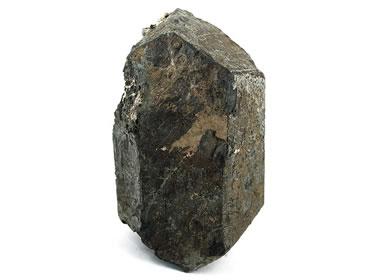
whythelongface wrote:What are your tricks for identifying augite/pyroxene vs. hornblende?
(it's hard to in pictures. I wasn't sure which one it was myself) Cleavage plane angles, hornblende is sparklier, augite typically has a greenish tint, hornblende is typically black, etc.
Basically what Scott said, but also hornblende is usually more lustrous? Maybe I'm using the wrong terminology but not sure.
Yea the luster is different. I used the technical term of "sparkly" to describe it.
Re: Rocks and Minerals B/C
Posted: September 20th, 2017, 12:21 pm
by OrigamiPlanet
ScottMaurer19 wrote:
OrigamiPlanet wrote:
ScottMaurer19 wrote:
(it's hard to in pictures. I wasn't sure which one it was myself) Cleavage plane angles, hornblende is sparklier, augite typically has a greenish tint, hornblende is typically black, etc.
Basically what Scott said, but also hornblende is usually more lustrous? Maybe I'm using the wrong terminology but not sure.
Yea the luster is different. I used the technical term of "sparkly" to describe it.
Is someone going to place another question?
Re: Rocks and Minerals B/C
Posted: September 21st, 2017, 1:32 pm
by OrigamiPlanet
I'm gonna put down some more questions then... if you guys do not mind.
1. What is a ruby a variant of?
2. What is an emerald a variant of?
3. Differentiate each of the gypsum varieties.
4. Differentiate breccia and conglomerate.
Re: Rocks and Minerals B/C
Posted: September 21st, 2017, 4:26 pm
by whythelongface
OrigamiPlanet wrote:I'm gonna put down some more questions then... if you guys do not mind.
1. What is a ruby a variant of?
2. What is an emerald a variant of?
3. Differentiate each of the gypsum varieties.
4. Differentiate breccia and conglomerate.
1. Corundum
2. Beryl
3. Selenite = clear, satin spar = sheets of satin-y gypsum similar to ulexite in appearance, alabaster = fine grained
4. Breccia = cemented sharp, jagged fragments, conglomerate = cemented, rounded fragments.
Re: Rocks and Minerals B/C
Posted: September 22nd, 2017, 12:19 pm
by OrigamiPlanet
whythelongface wrote:
OrigamiPlanet wrote:I'm gonna put down some more questions then... if you guys do not mind.
1. What is a ruby a variant of?
2. What is an emerald a variant of?
3. Differentiate each of the gypsum varieties.
4. Differentiate breccia and conglomerate.
1. Corundum
2. Beryl
3. Selenite = clear, satin spar = sheets of satin-y gypsum similar to ulexite in appearance, alabaster = fine grained
4. Breccia = cemented sharp, jagged fragments, conglomerate = cemented, rounded fragments.
Yup! Your turn now.
Re: Rocks and Minerals B/C
Posted: September 23rd, 2017, 1:35 pm
by whythelongface
[img]https://minerals-74fa.kxcdn.com/images/stories/virtuemart/product/8485bmst%20(6).jpg[/img]
1. Name the blue mineral.
2. Name the gray mineral.
3. Name one industrial use of the blue mineral, if any.
4. Name one industrial use of the gray mineral, if any.
5. List three other minerals you might expect to find near where this specimen was found.
Re: Rocks and Minerals B/C
Posted: September 24th, 2017, 11:46 am
by sg2themax
whythelongface wrote:
[img]https://minerals-74fa.kxcdn.com/images/stories/virtuemart/product/8485bmst%20(6).jpg[/img]
1. Name the blue mineral.
2. Name the gray mineral.
3. Name one industrial use of the blue mineral, if any.
4. Name one industrial use of the gray mineral, if any.
5. List three other minerals you might expect to find near where this specimen was found.
1. Fluorite
2. Galena
3. Used as flux in the manufacture of steel and other metals to eliminate impurities.
4. It is the primary source of lead.
5. It can be found with other minerals such as calcite, quartz, and sphalerite.
Re: Rocks and Minerals B/C
Posted: September 24th, 2017, 1:00 pm
by whythelongface
sg2themax wrote:
whythelongface wrote:
[img]https://minerals-74fa.kxcdn.com/images/stories/virtuemart/product/8485bmst%20(6).jpg[/img]
1. Name the blue mineral.
2. Name the gray mineral.
3. Name one industrial use of the blue mineral, if any.
4. Name one industrial use of the gray mineral, if any.
5. List three other minerals you might expect to find near where this specimen was found.
1. Fluorite
2. Galena
3. Used as flux in the manufacture of steel and other metals to eliminate impurities.
4. It is the primary source of lead.
5. It can be found with other minerals such as calcite, quartz, and sphalerite.
Correct, your turn.
Re: Rocks and Minerals B/C
Posted: September 25th, 2017, 3:19 pm
by sg2themax
[hide]
Question
1. Identify this mineral.
2. How did you identify it?
3. What is its chemical composition?
4. What is its luster?[/hide]
Is hide broken or am I doing it wrong, it's the question so doesn't matter as much please tell me what I'm doing wrong.
Re: Rocks and Minerals B/C
Posted: September 25th, 2017, 4:03 pm
by whythelongface
Remove the quotes portion. Also, make sure you have a | symbol after "Question".
[img]http://geology.com/minerals/photos/augite-crystal.jpg[/img]
1. Identify this mineral.
2. How did you identify it?
3. What is its chemical composition?
4. What is its luster?
Dunno what's wrong with the image... and accessing the link makes it obvious...