wheyprotein wrote:There hasn't been a question in a long time so I'll ask!
1. Family?
2. Where does it eat? Give two examples of what it would eat.
3. T/F The females are polyandrous. Define polyandrous.
4. Conservation?
Okay, I got the answer without cheating, but the genus is in the URL so be careful
1) Emydidae
2) Can forage on land and catch prey in water; frogs and crayfish
3) F; One female gets exclusive mating rights to many males
4) Endangered
Oops . Anyways, you are correct! Proceed with the next question!
Re: Herpetology B/C
Posted: April 18th, 2018, 1:54 pm
by UTF-8 U+6211 U+662F
Describe the difference between viviparity, ovoviviparity, ovuliparity, and true oviparity. Give an example for each (use a reptile/amphibian if possible).
Re: Herpetology B/C
Posted: April 24th, 2018, 2:39 pm
by Froggie
UTF-8 U+6211 U+662F wrote:Describe the difference between viviparity, ovoviviparity, ovuliparity, and true oviparity. Give an example for each (use a reptile/amphibian if possible).
Viviparity: Live young, not eggs. Ovoviviparity: Form eggs, and the eggs stay inside the mother until ready to hatch. Can hatch either inside the body or eggs sacs are expelled from the mother’s body. Ovuliparity: (not really sure) fertilization is external. True oviparity: (not really sure either) fertilization is internal.
Viviparous: Storeria
Ovoviviparous: Nerodia
Ovuliparity: Scaohiopus
True oviparous: Elapidae
Re: Herpetology B/C
Posted: April 24th, 2018, 2:51 pm
by UTF-8 U+6211 U+662F
Froggie wrote:
UTF-8 U+6211 U+662F wrote:Describe the difference between viviparity, ovoviviparity, ovuliparity, and true oviparity. Give an example for each (use a reptile/amphibian if possible).
Viviparity: Live young, not eggs. Ovoviviparity: Form eggs, and the eggs stay inside the mother until ready to hatch. Can hatch either inside the body or eggs sacs are expelled from the mother’s body. Ovuliparity: (not really sure) fertilization is external. True oviparity: (not really sure either) fertilization is internal.
Viviparous: Storeria
Ovoviviparous: Nerodia
Ovuliparity: Scaohiopus
True oviparous: Elapidae
Yep, except not sure about Nerodia and Elapidae
Your turn!
Re: Herpetology B/C
Posted: May 5th, 2018, 1:05 pm
by Almandine
¯\_(ツ)_/¯
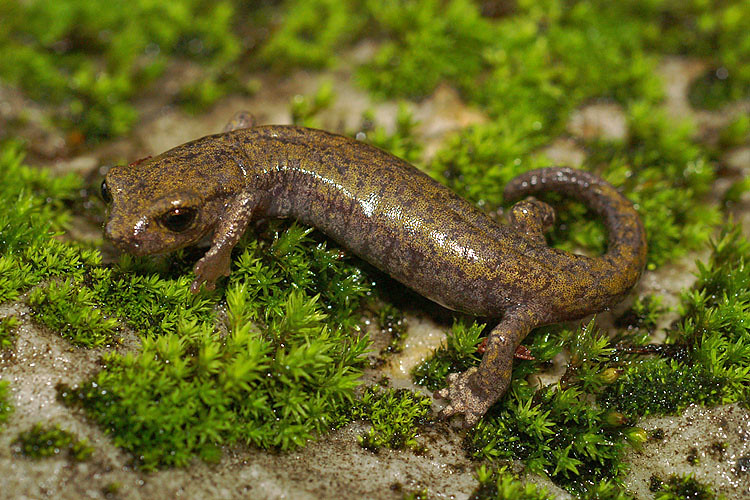
What part of this genus's body can project up to 80% of its length?
List genus and body part.
Re: Herpetology B/C
Posted: May 5th, 2018, 1:33 pm
by nyoomnyoom
Almandine wrote:¯\_(ツ)_/¯
What part of this genus's body can project up to 80% of its length?
List genus and body part.
ooh fun I like this one
hydromantes, and its long, sticky tongue
Re: Herpetology B/C
Posted: May 5th, 2018, 1:44 pm
by Almandine
ಠ_ಠ
Correct, you may go.
Re: Herpetology B/C
Posted: May 5th, 2018, 2:07 pm
by axolotl
Not sure if I entered the image correctly
What percent of this organism's habitat is now destroyed?
How do juveniles differ from adults?
What time of year is this organism most commonly seen?
Do females or males live longer?
What is the most optimal water temperature for this organism?
T/F: Females mate every single mating season.
Re: Herpetology B/C
Posted: May 9th, 2018, 4:37 pm
by UTF-8 U+6211 U+662F
axolotl wrote: Not sure if I entered the image correctly
What percent of this organism's habitat is now destroyed?
How do juveniles differ from adults?
What time of year is this organism most commonly seen?
Do females or males live longer?
What is the most optimal water temperature for this organism?
T/F: Females mate every single mating season.
I'm thinking this is a musk turtle? 70%, juveniles are smaller, summer, females, 20-30 degrees Celsius, T
Re: Herpetology B/C
Posted: May 9th, 2018, 5:09 pm
by axolotl
UTF-8 U+6211 U+662F wrote:
axolotl wrote: Not sure if I entered the image correctly
What percent of this organism's habitat is now destroyed?
How do juveniles differ from adults?
What time of year is this organism most commonly seen?
Do females or males live longer?
What is the most optimal water temperature for this organism?
T/F: Females mate every single mating season.
I'm thinking this is a musk turtle? 70%, juveniles are smaller, summer, females, 20-30 degrees Celsius, T
Nope, try again on the identification. (sorry this is a bad angle lol)
1) Emydidae 2) Can forage on land and catch prey in water; frogs and crayfish 3) F; One female gets exclusive mating rights to many males 4) Endangered

 . Anyways, you are correct! Proceed with the next question!

 Not sure if I entered the image correctly