

Cathy-TJ wrote:1) What part of what fossilized organism is shown in the attached image?
2) What was it's main function?
https://drive.google.com/open?id=1IT9LW ... 9sidNlq1U5
1) Sclerotic ring
2) It supports the eye, especially in underwater animals

Cathy-TJ wrote:1) What part of what fossilized organism is shown in the attached image?
2) What was it's main function?
https://drive.google.com/open?id=1IT9LW ... 9sidNlq1U5
1) Sclerotic ring
2) It supports the eye, especially in underwater animals

Nice!wec01 wrote:Cathy-TJ wrote:1) What part of what fossilized organism is shown in the attached image?
2) What was it's main function?
https://drive.google.com/open?id=1IT9LW ... 9sidNlq1U51) Sclerotic ring 2) It supports the eye, especially in underwater animals

It has been requested that I do this question and then let someone else post another (Hello wec01)wec01 wrote:
1) Identify
2) What Order is this genus a member of?
3) What is the time range of its Phylum?
4) What other Phylum on the list fills a similar niche as this one?
1) Mucrospirifer (the best brachiopod)
2) Spiriferida
3) Cambrian to Recent
4) This question is left as an exercise to the reader
(jk uhhh Orthida?)
Cathy-TJ wrote:It has been requested that I do this question and then let someone else post another (Hello wec01)wec01 wrote:
1) Identify
2) What Order is this genus a member of?
3) What is the time range of its Phylum?
4) What other Phylum on the list fills a similar niche as this one?1) Mucrospirifer (the best brachiopod) 2) Spiriferida 3) Cambrian to Recent 4) This question is left as an exercise to the reader (jk uhhh Orthida?)
For number 4 the answer would be Mollusca, specifically Bivalvia (I probably should've asked something along the lines of "What Class fills a similar niche to this Phylum?") since both bivalves and brachiopods are 2-valved, calcareous, bottom-dwelling, filter-feeding, etc. This question probably could've been expressed better.

wec01 wrote:Cathy-TJ wrote:It has been requested that I do this question and then let someone else post another (Hello wec01)wec01 wrote:
1) Identify
2) What Order is this genus a member of?
3) What is the time range of its Phylum?
4) What other Phylum on the list fills a similar niche as this one?1) Mucrospirifer (the best brachiopod) 2) Spiriferida 3) Cambrian to Recent 4) This question is left as an exercise to the reader (jk uhhh Orthida?)Here is another question:For number 4 the answer would be Mollusca, specifically Bivalvia (I probably should've asked something along the lines of "What Class fills a similar niche to this Phylum?") since both bivalves and brachiopods are 2-valved, calcareous, bottom-dwelling, filter-feeding, etc. This question probably could've been expressed better.
1) Identify
2) What are the white, concavo-convex segments called?
3) What are the separations between them called?
4) What is the white substance filling them?
5) What is the tube in the middle connecting them?
1. Orthoceras
2. Chambers(?)
3. Septa
4. Calcite
5. Siphuncle
doolydino wrote:wec01 wrote:Cathy-TJ wrote:
It has been requested that I do this question and then let someone else post another (Hello wec01)1) Mucrospirifer (the best brachiopod) 2) Spiriferida 3) Cambrian to Recent 4) This question is left as an exercise to the reader (jk uhhh Orthida?)Here is another question:For number 4 the answer would be Mollusca, specifically Bivalvia (I probably should've asked something along the lines of "What Class fills a similar niche to this Phylum?") since both bivalves and brachiopods are 2-valved, calcareous, bottom-dwelling, filter-feeding, etc. This question probably could've been expressed better.
1) Identify
2) What are the white, concavo-convex segments called?
3) What are the separations between them called?
4) What is the white substance filling them?
5) What is the tube in the middle connecting them?1. Orthoceras 2. Chambers(?) 3. Septa 4. Calcite 5. Siphuncle
Note: for 2, they are also called camera; either works
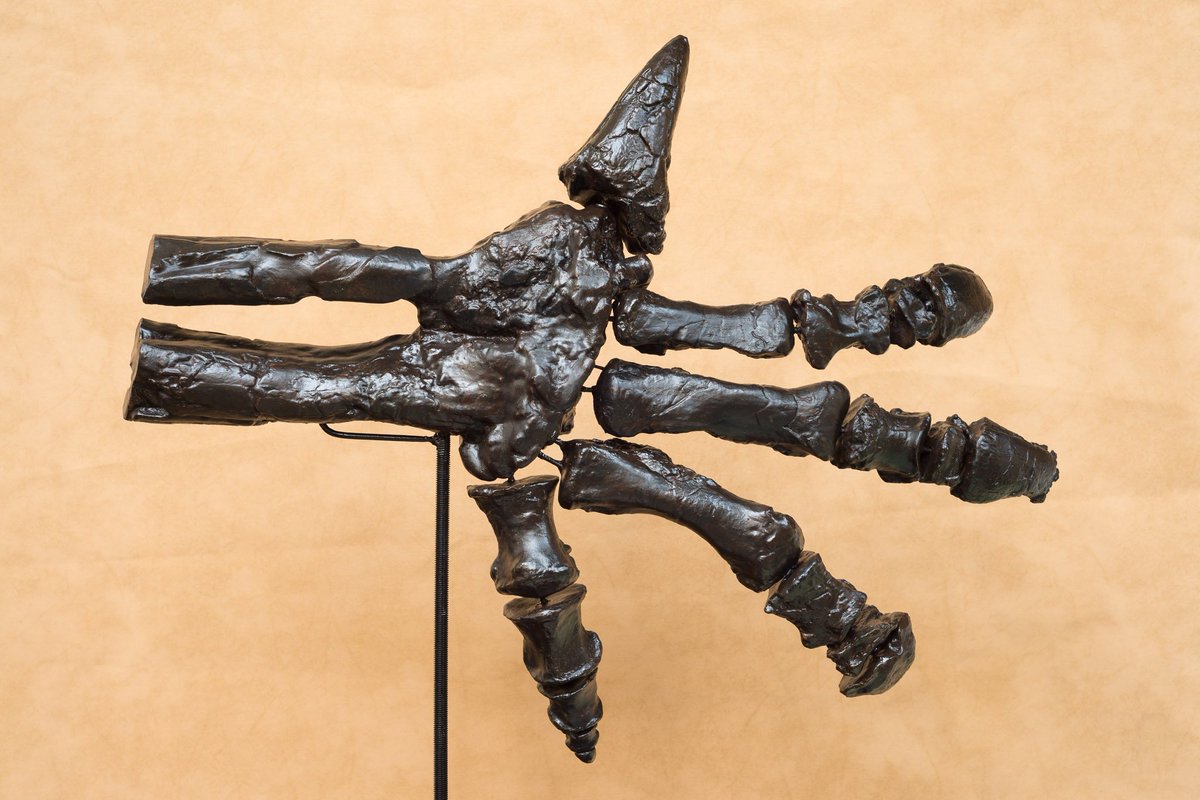
doolydino wrote:
1. Identify
2. Who named this specimen and when?
3. This animal is considered to be the "missing link" between which two types of animals?
4. Some of these fossilized specimens exhibit pyrite disease. What is pyrite disease, and what is one way to combat this problem?
5. Scientists processed these specimens' bones to look for what?
1. Iguanodon
2. Gideon Mantell, 1825
3. bird-footed bipedal species and duck-billed quadrupeds
4. This is when pyrite gets into the fossil and under humid conditions it oxidizes and expands. This can be prevented by storing fossils in dry conditions.
5. remnants of DNA
Yepwec01 wrote:doolydino wrote:
1. Identify
2. Who named this specimen and when?
3. This animal is considered to be the "missing link" between which two types of animals?
4. Some of these fossilized specimens exhibit pyrite disease. What is pyrite disease, and what is one way to combat this problem?
5. Scientists processed these specimens' bones to look for what?1. Iguanodon 2. Gideon Mantell, 1825 3. bird-footed bipedal species and duck-billed quadrupeds 4. This is when pyrite gets into the fossil and under humid conditions it oxidizes and expands. This can be prevented by storing fossils in dry conditions. 5. remnants of DNA
Users browsing this forum: No registered users and 2 guests