I'm going to second everything DoctaDave said above. The polyhedral is quite beneficial, and almost no more difficult to construct than standard dihedral. But the rectangular planform with lower wing loading is extremely likely to have benefits over the elliptical wing other than ease of construction. The short answer is that lift/drag ratio matters less and less as wing loading increases at these low speeds. The long answer is this:
Lift equation:

Drag equation:

For level flight, L = mg = constant, so, substituting L = mg and solving for the velocity required to maintain level flight:
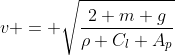
Then, setting T (thrust) = D (drag) for constant velocity and solving the drag equation:
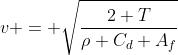
Setting the two equal, eliminating the variable v, and solving for thrust required to maintain level flight:
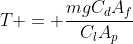
Multiplying both sides by the earlier expression for v, power required for level flight is obtained:
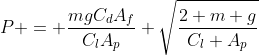
Power required to maintain level flight is a largely accepted measurement of efficiency for indoor models, as the lower the power required to maintain level flight, the less torque required, and thus thinner rubber which can take many more turns can be used optimally.
It's easy to calculate what kind of advantage in drag coefficient would be needed for an elliptical wing to have the same efficiency as a rectangular wing:

Where the subscripts e and r denote elliptical and rectangular, respectively. Eliminating variables and manipulating this equation:
^{3/2})
Substituting in values of area for 45x6 rectangular and elliptical wings:

This means that the drag coefficient of an elliptical wing model - not just the wing, but the whole airplane - would have to be well over 30% less than that of a rectangular wing to have any measurable advantage. If the wing were the only source of drag on the model, I could see this being reasonably possible, but given that the stab and rudder are also major sources of drag and the fuselage can actually have quite a bit of profile drag which is unavoidable, I just can't see the (very complicated) construction of an elliptical wing being worth the effort, nor can I see the elliptical wing itself being beneficial. But then again I'm not an aerodynamicist, and my knowledge/intuition of the behavior of drag coefficients is not the most extensive.
I might come back and give some general design tips, but this is enough forum posting for me in one day.